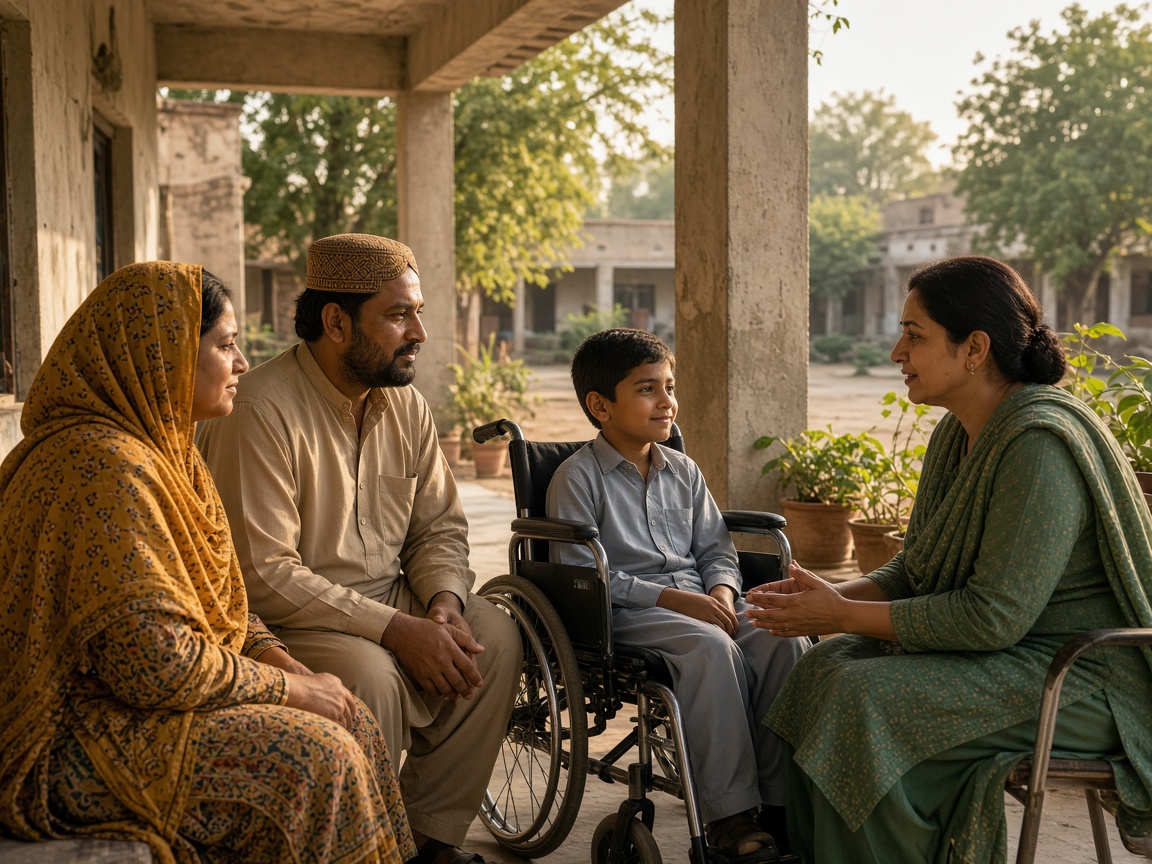
Myth
“Inclusion lowers academic standards.”
Inclusive Education
Inclusive education means children learn in the same neighbourhood school. Support arrives in the classroom — the child is not sent away to wait.
In Sindh this is everyday practice: clearer lessons, adapted materials, and adults who notice what each learner needs next.
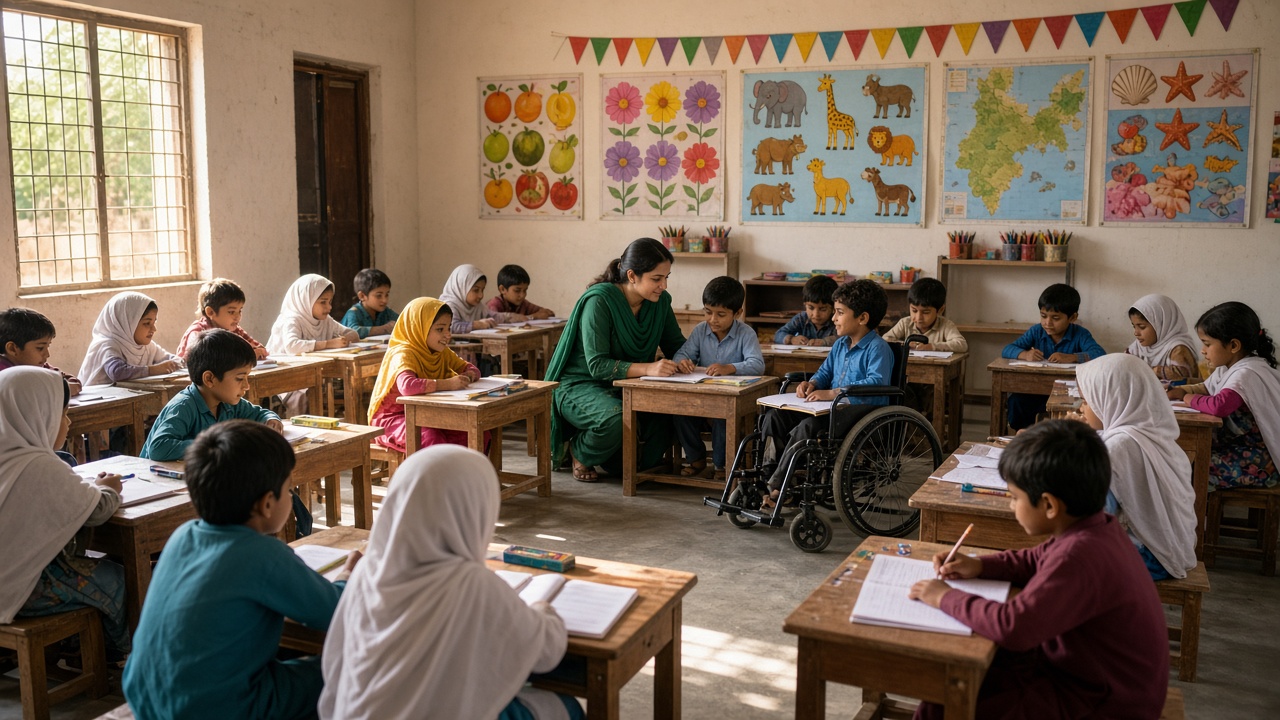
Meaning
The local school prepares for different ways of seeing, hearing, moving and learning — with classmates, not apart from them.
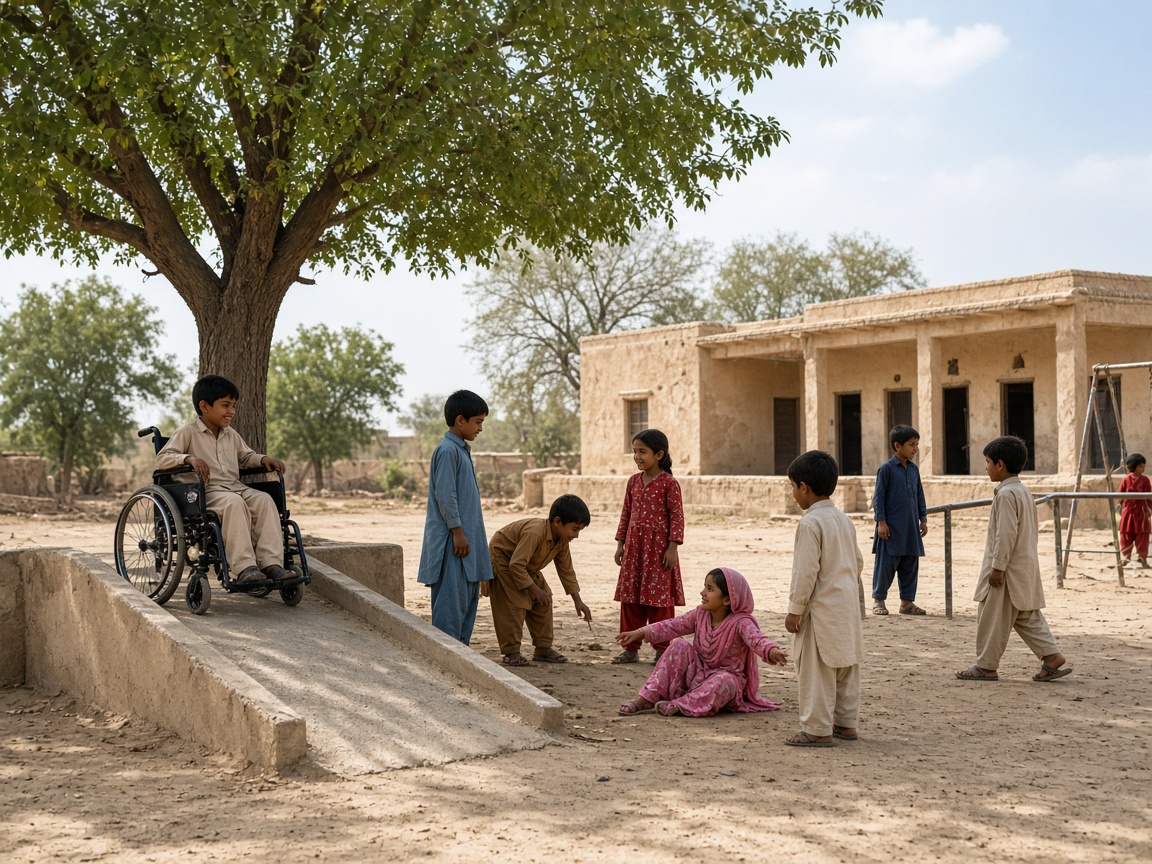
Myths vs facts
“Inclusion lowers academic standards.”
Good inclusive teaching uses clearer goals and flexible methods that help everyone.
“Only special schools can help.”
Most children thrive when the local school adapts with training and the right tools.
Family voice
We worried the gate would close. A teacher met us, listed what papers we had, and walked us to the classroom.
“Nobody asked us to wait outside. They asked what our child loves.”
[Name], parent — story to be confirmed with consent